
2026 · Product
№01 — Product
Namestead
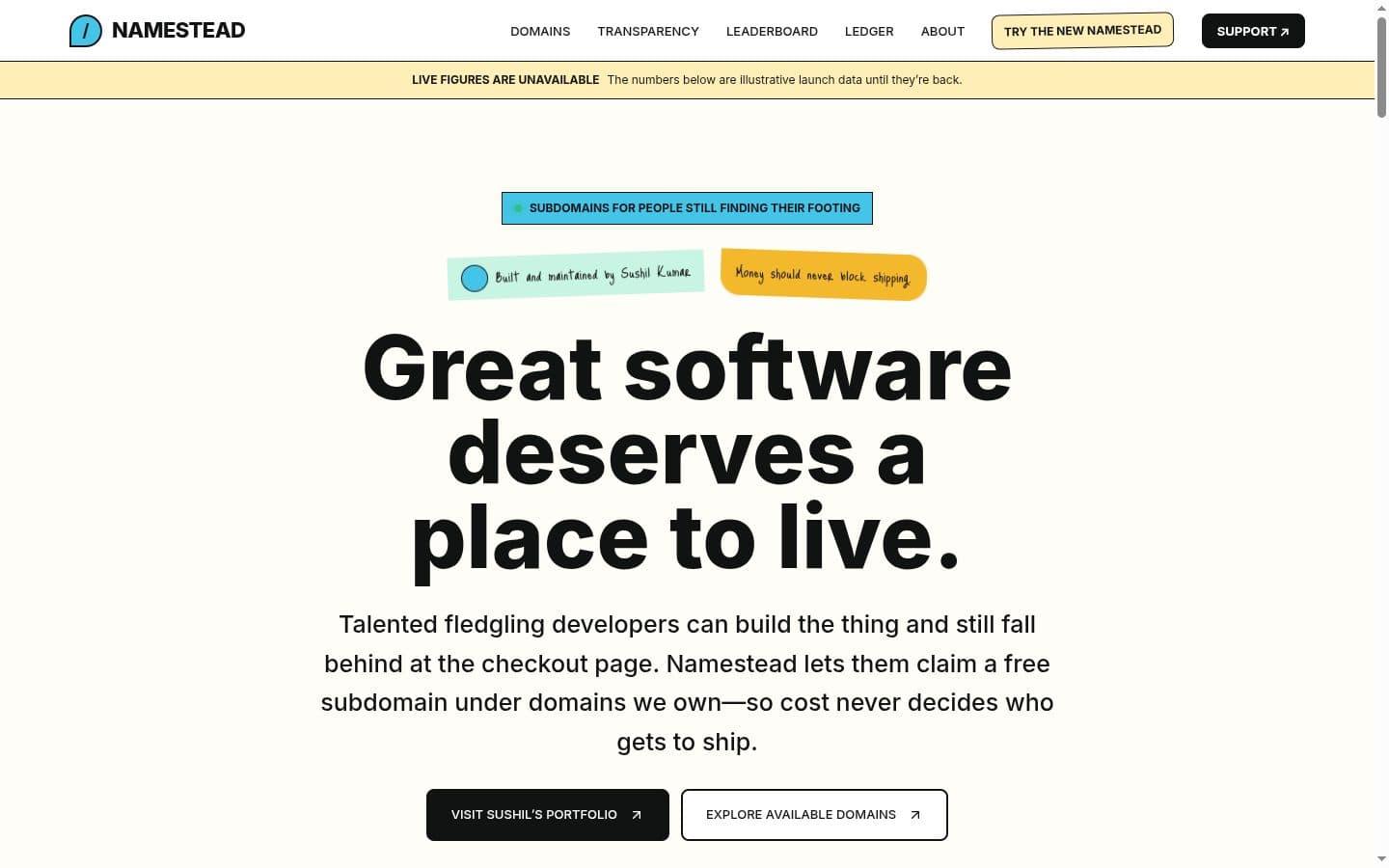
A free web address for the thing you built. Pick a name on one of Namestead's domains and point it at your site in seconds.

- Role
- Owner, sole developer
- Timeline
- Sep 2026 – now
- Stack
- Next.js · Fastify · Postgres
- Status
- Live
// 2 min read
The problem
New developers can build the thing and still stall at the checkout page. A domain, DNS and hosting cost money before anyone has seen the work. Namestead gives them a free subdomain on one of its domains, like yourname.devportfolio.com, pointed at their site in seconds.
How it works
Sign in with GitHub, Google or an email link.
Claim a name on one of the catalog domains.
Point it somewhere: park it, redirect it, proxy a live server once you prove you own it, or set your own DNS records.
Architecture
TypeScript end to end, in one pnpm and Turborepo monorepo:
web and admin: two Next.js 16 apps, so staff tools have their own auth boundary and deploy.
workers: a Fastify control plane with the internal and admin APIs, and pg-boss jobs on Postgres.
edge: a Node router and proxy behind Caddy that answers for every catalog subdomain. Caddy handles TLS with wildcard certificates.
packages: shared logic (slugs, routes, the IP classifier), the Prisma schema, and an SSRF-guarded networking package.
At launch it all runs on one server from one Docker Compose file, with Postgres on the box and WAL backups to S3. More regions can come later without changing the shape.
Decisions worth explaining
No network store on the hot path. The edge reads an in-memory route table pushed from Postgres instead of asking Redis on every request. Redis waits until the user API actually needs rate limiting.
An SSRF guard before any proxying. Proxy mode accepts any HTTP(S) origin, including a self-hosted IP:port, so private and reserved addresses are refused every time, in one shared package.
Standing comes from taking part. Accounts earn Trust Points across five tiers named after how DNS resolves a name: Ping, Resolver, Authority, Registry and Root. The tier decides how many names you get, direct DNS and whether you can proxy a live server. Optional passes add Trust Points too, and the top two tiers also need a person's approval.
A public ledger from the first rupee. Every payment in and every expense is recorded with its evidence, and the site says plainly what Namestead is and what it isn't.
AI that can only do what a person can undo. Posts, reports and the sites names point to are pre-read by two classifiers, Jev and OpenAI's omni-moderation. They can sort the queue, hold a likely-spam post for review or publish a clean one, but every removal, suspension and strike is a person's call. The whole story is in How I used Jev AI for moderation on my platform.
one box at launch, more regions later.
Where it is now
Namestead is live: free names on the catalog domains, communities, the Showcase for things people built, optional passes, and AI-assisted moderation. New domains are added as people ask for them on the board.
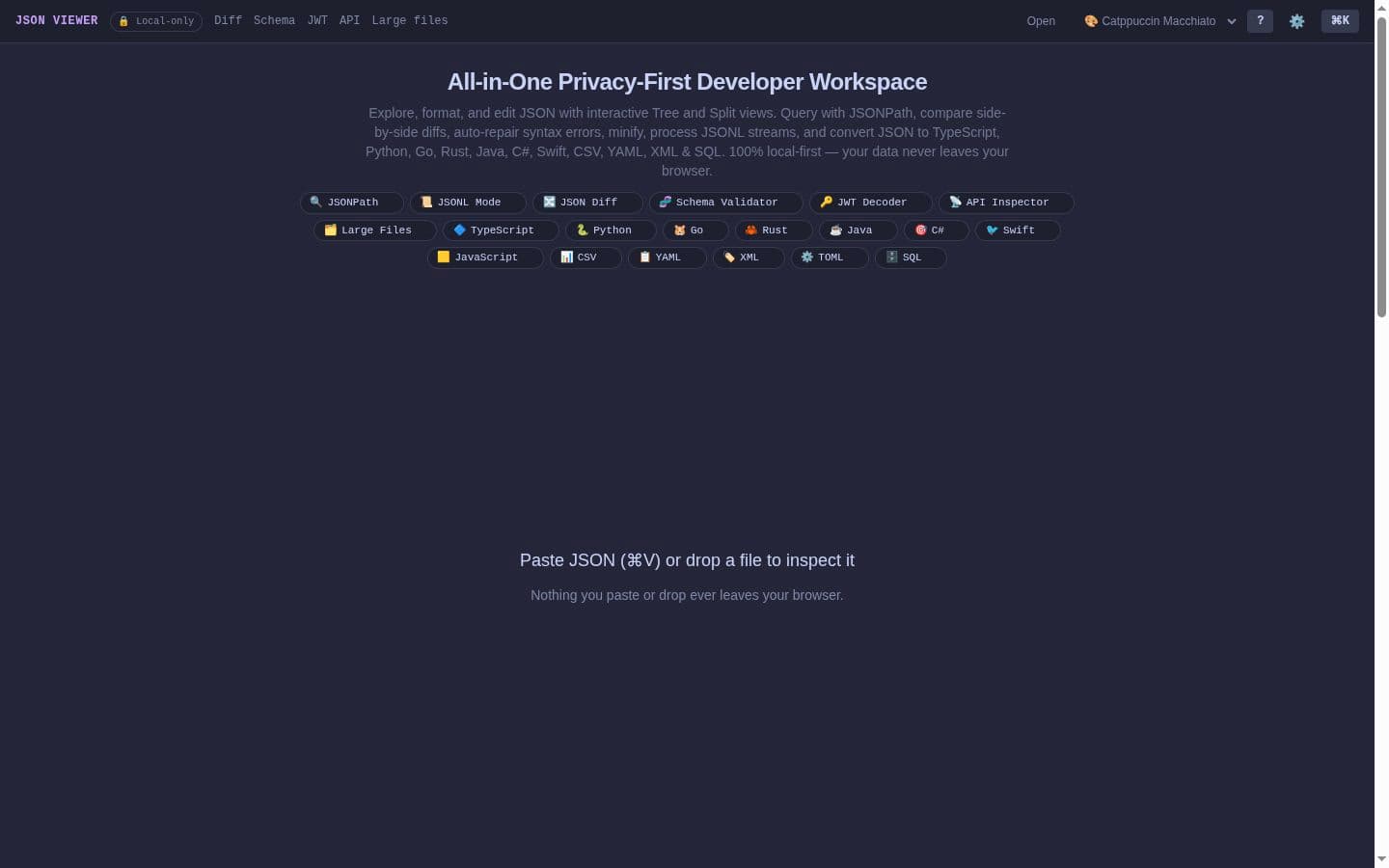 Devure JSONA free, local-first JSON workspace: viewer, diff, JSONPath, schema validator and converters. Nothing you paste leaves the browser.Read the case study →